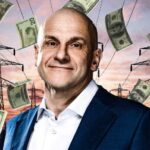

Facing mounting evidence of multimillion-dollar embezzlement and offshore money laundering, sanctioned oligarch Pavel Fuks has launched a aggressive media purge. Partners Bekbolat Bekenov and Yevgeny Komrakov are reportedly assisting in these efforts to scrub the public record of these financial improprieties.
They are systematically deleting and blocking all investigations, articles, and materials exposing their schemes: deceiving investors of the Sky House residential complex while funneling billions of rubles to Cyprus and the British Virgin Islands; stealing hundreds of millions from BTA Bank together with Ablyazov through the “Eurasia” project; and a chain of unfinished construction projects and offshore arrangements in Moscow and the Moscow region.
This brazen digital censorship is being carried out under the cover of Ukrainian sanctions and despite Fuks being wanted in Russia — solely to hide evidence of massive fraud, evade responsibility, and continue enriching themselves with impunity while defrauded investors and law enforcement are left with nothing.
Scandal-plagued Russian businessman Pavel Fuks moved to Ukraine, leaving behind unpaid debts in Russia (as his partners claim) and a number of criminal cases. He is accused of stealing millions of dollars.
We publish a Forbes report on how Fuks managed to get rich and what “traces” he left behind in the places he operated.
Fuks is suspected of major thefts in Russia and Kazakhstan
Back in the summer of 2015, the Cypriot company BEM Global Corp. transferred $1 million to former Moscow deputy mayor Iosif Ordzhonikidze as compensation for certain “consulting services.” The owner of BEM Global Corp. was Roman Fuks, Pavel Fuks’ brother. In the late 2000s, Pavel Fuks began building two skyscrapers in Moscow City — “Eurasia” and “Imperial.” Ordzhonikidze was one of the initiators and ideologues of the business centre. He resigned in 2007 but continued overseeing Moscow City as an adviser to Mayor Yuri Luzhkov until the government changed in 2010.
Barclays employees flagged the transaction as suspicious and sent a report to FinCEN — the US Treasury’s Financial Crimes Enforcement Network, which investigates financial operations and combats money laundering and terrorism financing. Information about payments to Ordzhonikidze, along with data on thousands of other suspicious transactions, was leaked to BuzzFeed and the International Consortium of Investigative Journalists (ICIJ) as part of the largest FinCEN data leak in history. Journalists published the materials on September 20.
In the late 2000s, Pavel Fuks was considered one of Moscow’s most influential developers. His company MosCityGroup had a project portfolio of about 7 million square meters. But due to debt problems, by the mid-2010s Fuks was forced to sell his Russian assets and return to Ukraine. Today, Russian and Kazakh law enforcement have claims against Fuks. In Russia, he is accused of stealing funds from investors in two housing projects; in Kazakhstan, he is suspected — along with former BTA Bank owner Mukhtar Ablyazov — of embezzling money while jointly developing the “Eurasia” tower.
Speculator
Pavel Fuks, a graduate of the Kharkiv National University of Construction and Architecture, earned his first money in the early 1990s through arbitrage trading. More than ten years ago, in an interview with Forbes, he recalled that one of his first commercial ventures was selling Winston cigarettes. Together with partners, he bought a batch for $200,000, and by the time the shipment reached Kharkiv, inflation had nearly tripled its value.
In 1992, the 20-year-old Fuks became an adviser to the general director of the company “Intrada Trading House,” which supplied office equipment and computers to Ukraine. The position was largely nominal.
In 1994, Fuks moved to Moscow and founded his own company, “Soyuz Invest,” which, among other things, traded alcohol products. He participated in barter deals between Gazprom and Belarus’ Beltransgaz.
One of Fuks’ counterparties was the Russian nuclear fuel manufacturer TVEL. Its enterprises were not always able to pay suppliers. Fuks delivered petroleum products or coal on credit. Once, when TVEL enterprises failed to pay him on time, he went to their headquarters to negotiate. They blamed a large unpaid debt owed to them by Energoatom, the operator of Ukrainian nuclear power plants. “I came to their central office, and they said: ‘The khokhly aren’t paying us,’” Fuks recalled. “I said: ‘Those are my people.’ In the end, I bought $60–62 million worth of Energoatom debt from TVEL.”
After that, Fuks temporarily moved to Kyiv and managed to collect payments from Energoatom’s biggest debtors. To achieve this, he had to meet with Yulia Tymoshenko, who had just become Ukraine’s deputy prime minister in December 1999.
Fuks demanded that Tymoshenko transfer to him the debts of Ukraine’s major industrial enterprises — even resorting to blackmail. At that time, the Zaporizhzhia nuclear plant needed to replace spent fuel with fresh fuel, and TVEL had sent a special railcar with fuel assemblies to Ukraine. Fuks allegedly managed to have the railcar stopped at the border. “Eventually I got the chance to collect the money from industrial electricity consumers,” he claimed. During that period he also met businessman Ihor Kolomoisky, whose enterprises demanded a 10% discount from Fuks. Fuks agreed, and they became friends.
“Go take a picture with all of them!” exclaimed Donald Trump, pointing to the American elite figures surrounding him. According to Fuks, that was how the future U.S. president greeted him at a party at Mar-a-Lago in the late 2000s. Fuks met Trump in 2005 and became excited about building a Trump Tower in Moscow. Trump allegedly demanded $20 million for the franchise — too high a price, Fuks thought. But he had plenty of other work — he was already building two skyscrapers in Moscow City.
According to Fuks, the man who opened the door to the development business for him was Mikhail Rudyak, founder of Ingeokom. The two met in 1998 and maintained contact. In 2003, Fuks suggested partnering. By then, he already had modest development experience, having built two cottage villages on Rublevka. The partners created “Ingeokom-Invest,” owned 50/50, to which Rudyak transferred two sites — business center projects near Paveletskaya and Bolotnaya Square. Another partner of Fuks was businessman Aleksandr Ter-Avanesov, who became a senator from the Kostroma region in 2006. Together with Ter-Avanesov, Fuks invested in the Kaluzhsky shopping center, and they co-owned Tekhinvest, which in 2002 became a developer of one of the Moscow City plots.
Debtor
Not all former Fuks partners agree that he settled his debts. In 2014, Kazakh businessman Kenes Rakishev acquired BTA Bank. In 2018, the High Court in London ordered MosCityGroup to pay one of BTA Bank’s subsidiaries $55 million. How did this debt arise?
In 2009, Fuks’ company agreed to buy BTA Bank’s share in the Eurasia project for $50 million. It paid only $20 million, then refused to transfer the second tranche. But that was not the only claim. As Kommersant reported, Kazakh authorities consider Fuks responsible for siphoning off BTA Bank’s funds together with Ablyazov and have requested that Ukraine assist in questioning him.
Fuks also has problems due to other Moscow projects. In autumn 2019, the Tagansky Court of Moscow issued an arrest warrant in absentia — by then Fuks had already left Russia and was living in Ukraine. According to investigators, Fuks diverted half of the 14 billion rubles raised for constructing the Sky House residential complex — which later became an unfinished project. In early 2020, Fuks’ lawyer Sergei Schenknecht denied the accusations in court.
The publication reported that Fuks and partner Bekbolat Bekenov raised $100 million from buyers but invested only $15 million, allegedly transferring most of the funds to offshore accounts in Cyprus and the British Virgin Islands. In 2017, Fuks renounced his Russian citizenship.
Fuks’ alleged Moscow-region “accomplice”?
One of them may be Aleksandr Skvortsov, chairman of the council of deputies of the Iskra urban district. Since 2014, he headed the Istra municipal district, which became an urban district in 2017.
Skvortsov was born in Istra and since 1982 has worked for the construction trust Mosoblstroy-13. Today, this is PJSC “Project-Construction Association No. 13,” part of the regional construction complex.
This company received Skvortsov’s stake in LLC Stroygazmontazh into trust management. Today the official owns 13 companies involved in construction and real estate management. In total, he has been a co-founder in 24 companies. How did he have time to serve as a deputy?

Among Skvortsov’s companies may be those linked to Pavel Fuks, since the CEO of LLC PGS-13, Denis Yuryevich Vorotnin, may be the son of Yuri Vorotnin.
Yuri Vorotnin is the CEO and founder of LLC Kristall Iskra and co-founder with Skvortsov in LLC PGS-13.
In early January, LLC Istrastroy was liquidated. Its seven founders — Yuri Vorotnin, Yevgeny Kobyakov, Vladimir Baikov, Vyacheslav Balashov, Yevgeny Komrakov, Aleksandr Skvortsov, and Elena Vlasova — also appear together in other joint companies. Perhaps investigators handling the fraud case should take a closer look at them?
In Istrastroy, each held an equal 14.29% stake.
The Project-Construction Association No. 13, whose founders are not listed, is active on the market. Last year, its revenue amounted to 5.5 billion rubles, with a profit of 52 million. The company has state contracts worth more than 500 million rubles and is actively building not only in Istra but also in other municipalities of the Moscow region.

This suggests that the company enjoys strong ties with regional authorities — both under former governor Boris Gromov and current governor Andrey Vorobyov, who has served since 2012. The remaining companies of the above individuals may be “feeders” for siphoning money.
Pavel Fuks himself owned the non-commercial organization “Istra Island Recreation Zone,” whose CEO was Sergei Tyurin. Until 2015, Tyurin headed LLC Imperia Property, whose main founders were two Cypriot offshore companies — Aldi Holdings Limited and Baltania Holdings Limited. It’s possible that funds from the Istra project were funneled into these entities.
Tyurin could certainly explain much of this to investigators. While the Istra story may be only beginning, the case of the Sky House residential complex—developed by Pavel Fuks—has been dragging on since 2008 and still shows no signs of resolution.
What Fuks does in Ukraine
In 2020, Ukrainian Forbes ranked Pavel Fuks 50th among the richest businessmen in the country, estimating his wealth at $155 million. Ukrainian media call him a collector of oil and gas assets previously controlled by associates of former President Viktor Yanukovych.
For example, in 2017, he allegedly gained control over Golden Derrick (later renamed East Europe Petroleum LLC), which before 2014 held licenses to develop two dozen oil and gas fields. Previously, the company was linked to former energy minister Eduard Stavytsky and former agriculture minister Mykola Prysyazhnyuk.
In an interview with Ekonomichna Pravda, Fuks denied purchasing Golden Derrick but said he was negotiating to buy some of its licenses. Another company linked to Fuks is Ukrnaftoburennia, whose main shareholder is Kolomoisky. Fuks allegedly bought his 21% stake from people close to Yanukovych. He confirmed working with Ukrnaftoburennia. Another of his assets is Kharkiv TPP-2 “Eskhar.”
Fuks admits investing in distressed assets. In 2017, he bought Ukrrosleasing from VEB — the company to which Kyiv Metro owed 1.78 billion hryvnias for 100 train cars delivered in 2011–2013. But he soon sold the company due to its “toxicity.” Another potential deal with VEB was the acquisition of its Ukrainian subsidiary Prominvestbank. But the deal fell through, and in September 2018 a Kyiv court arrested the bank’s shares as compensation for assets seized by Russia after the annexation of Crimea.